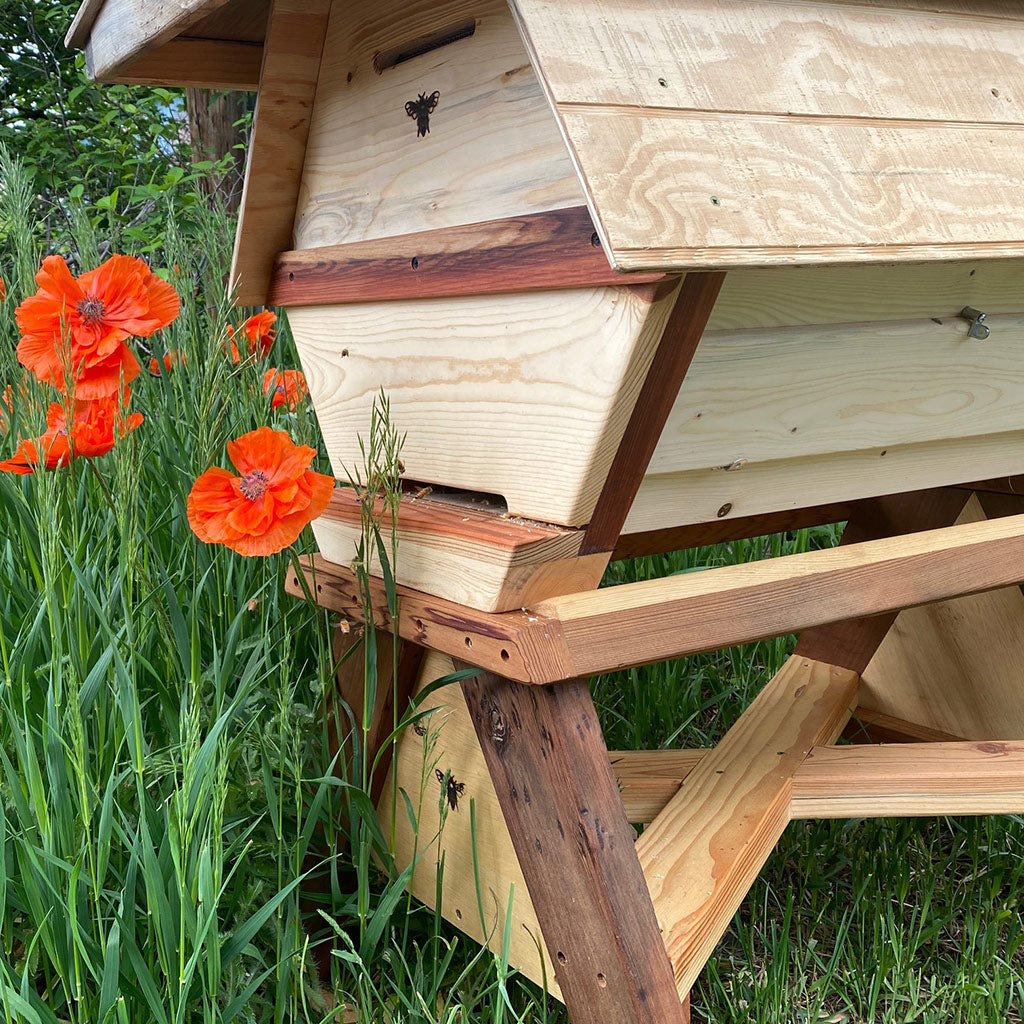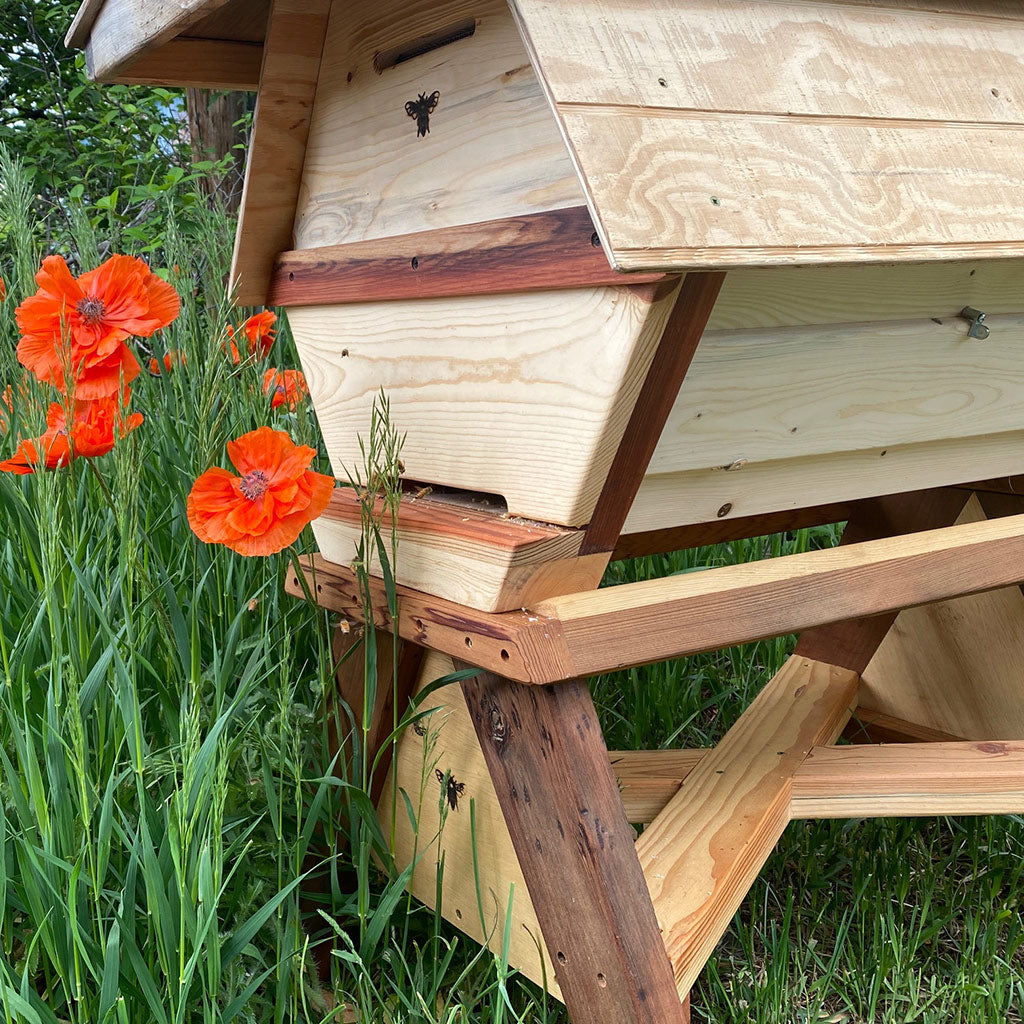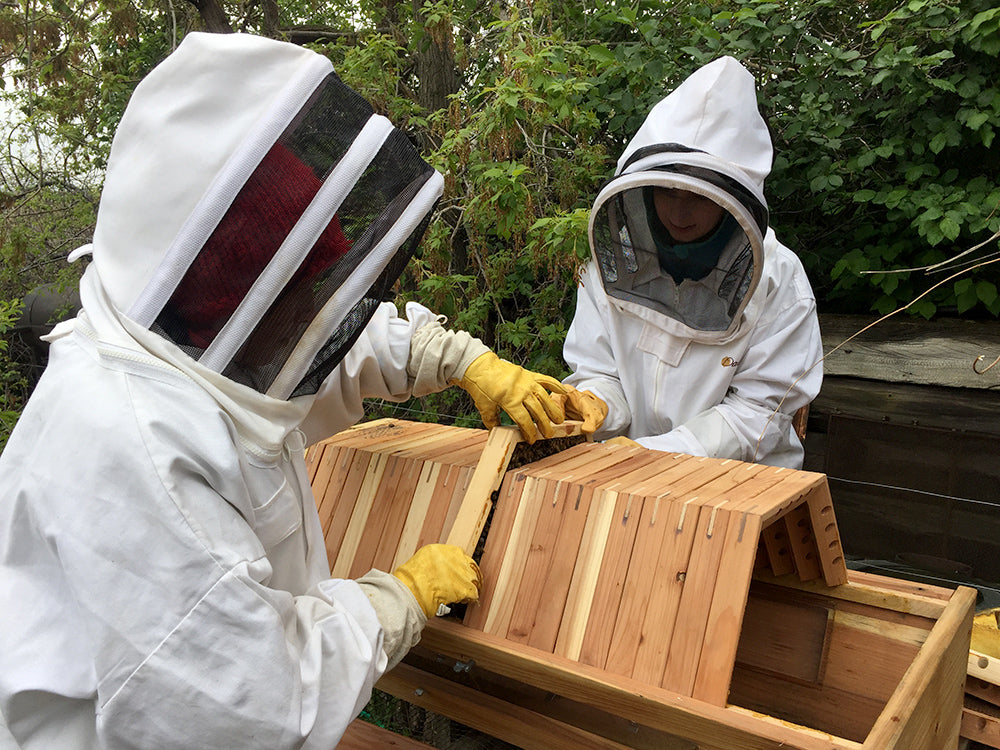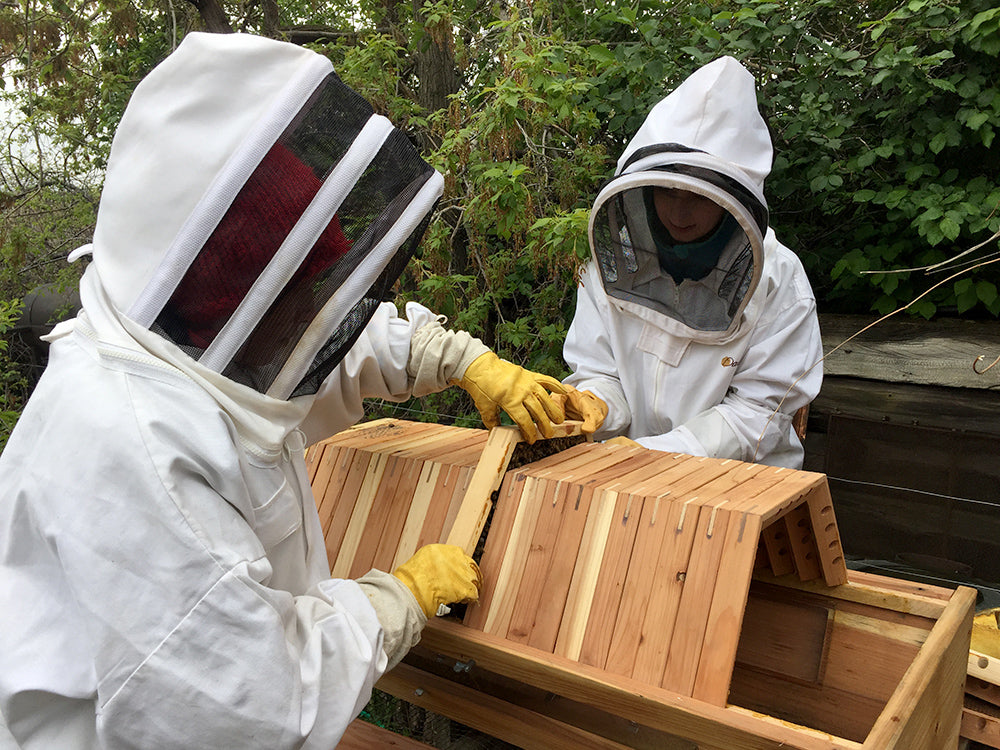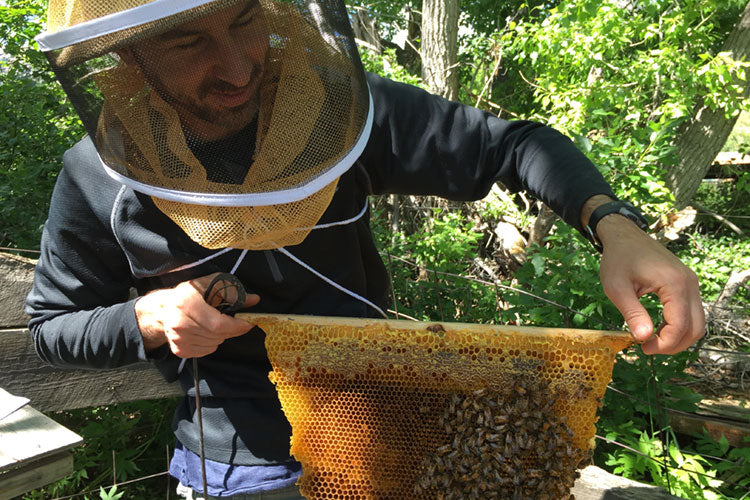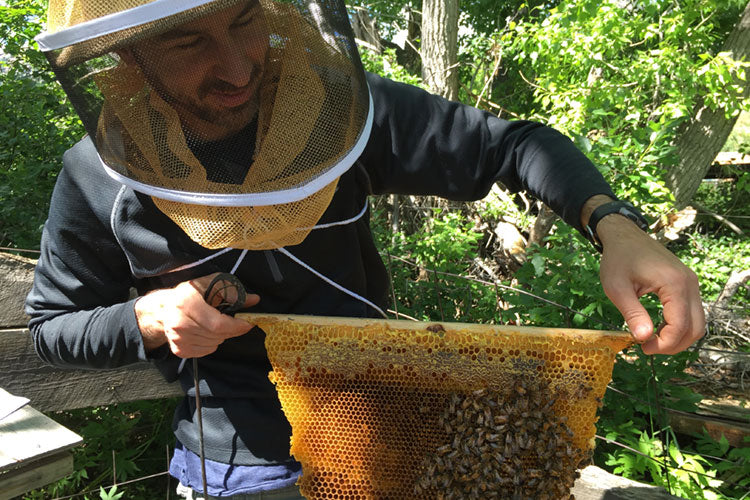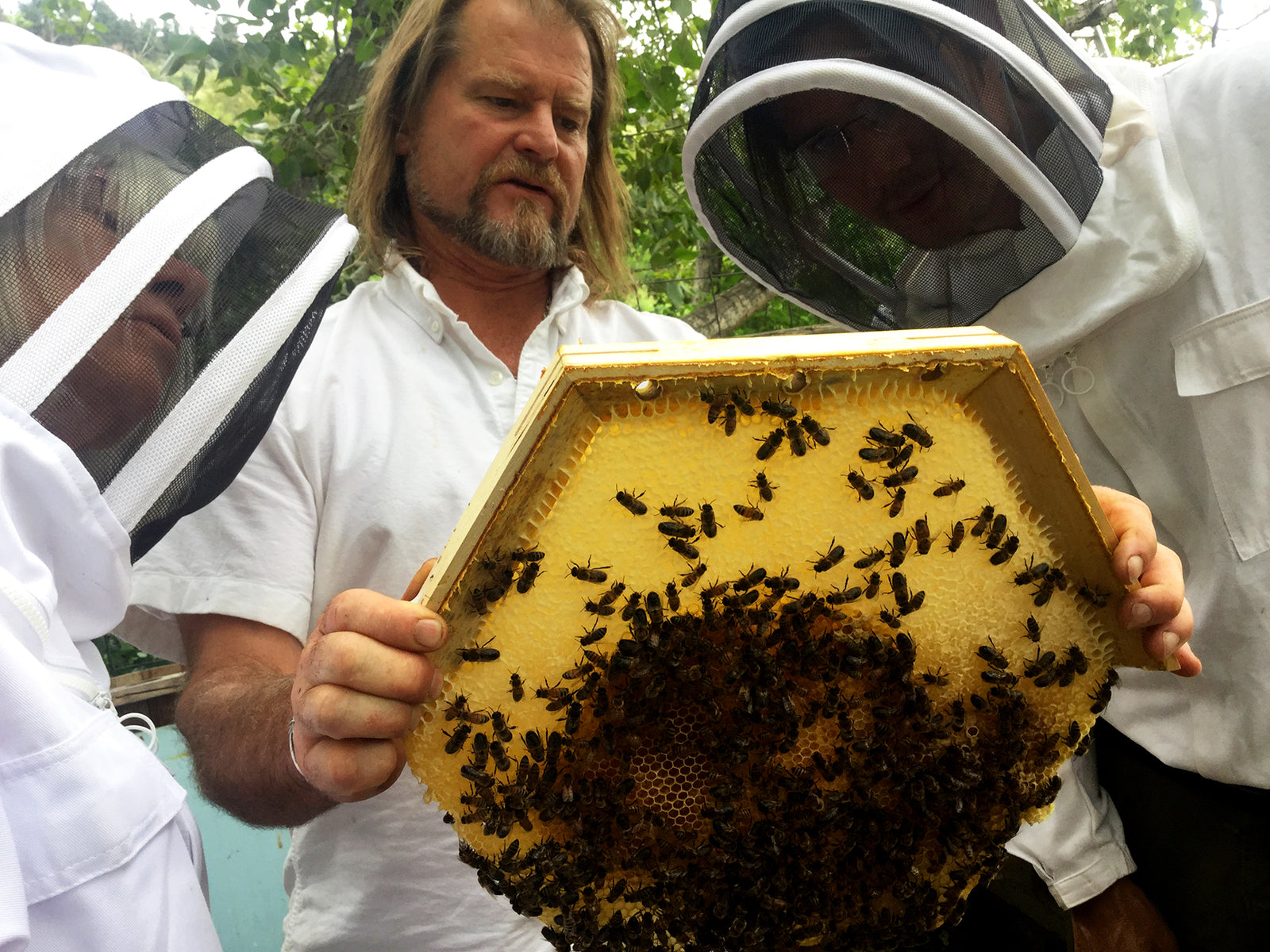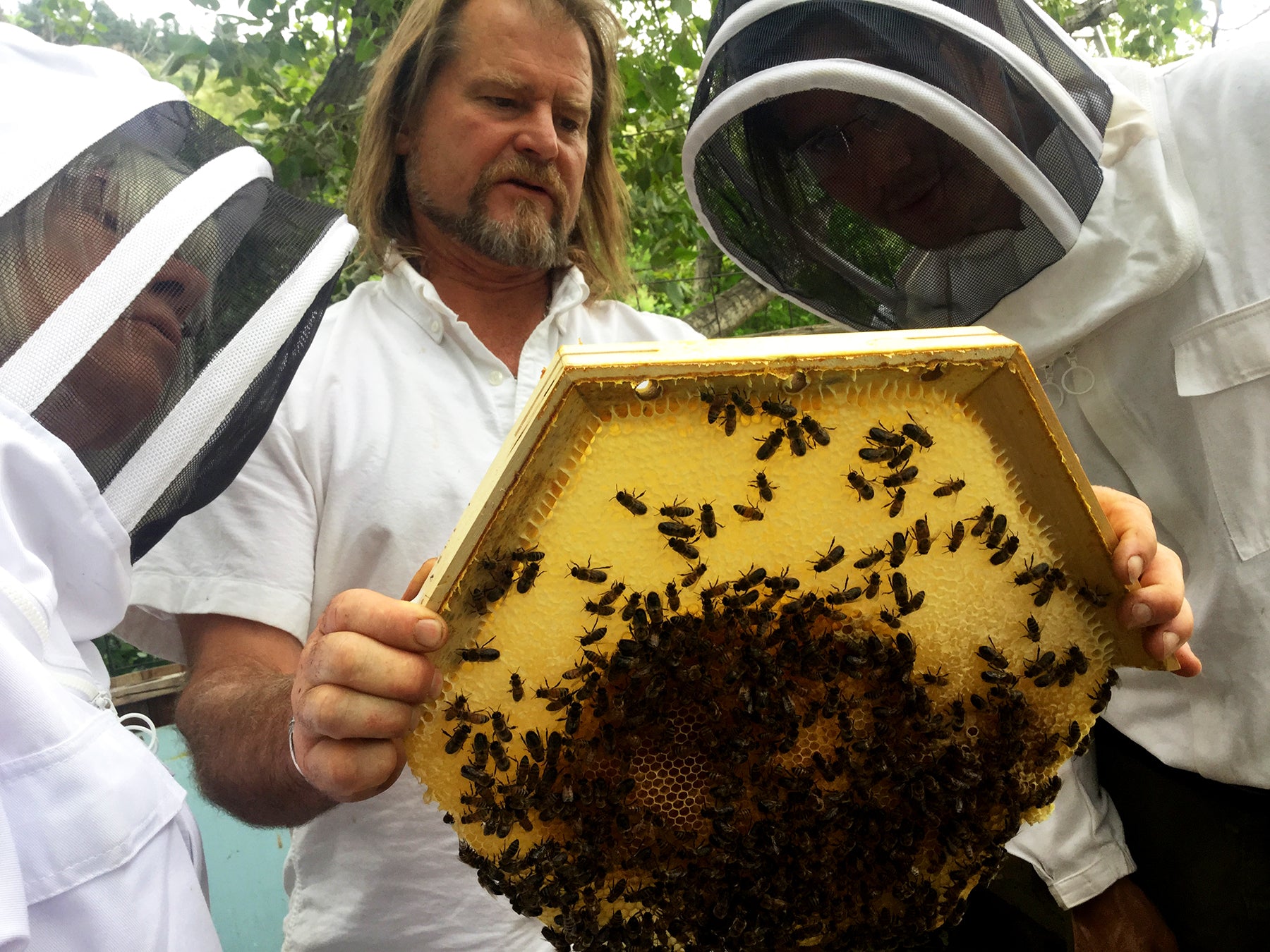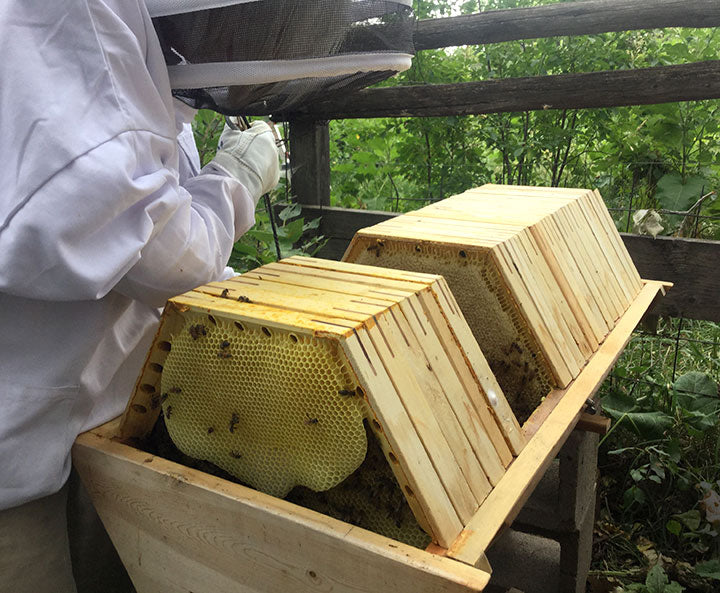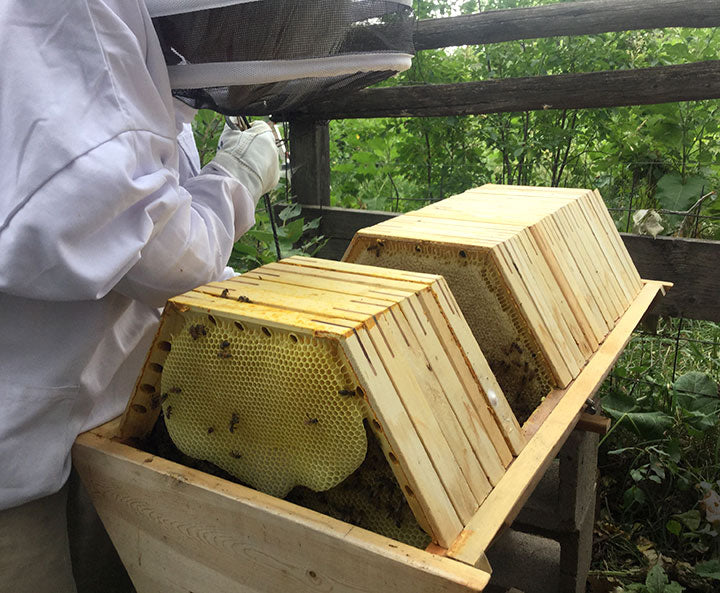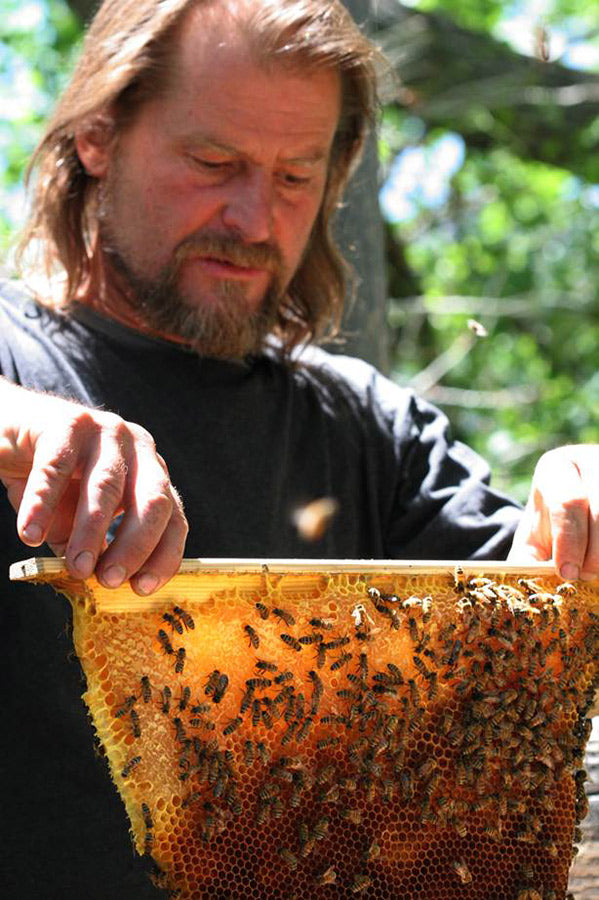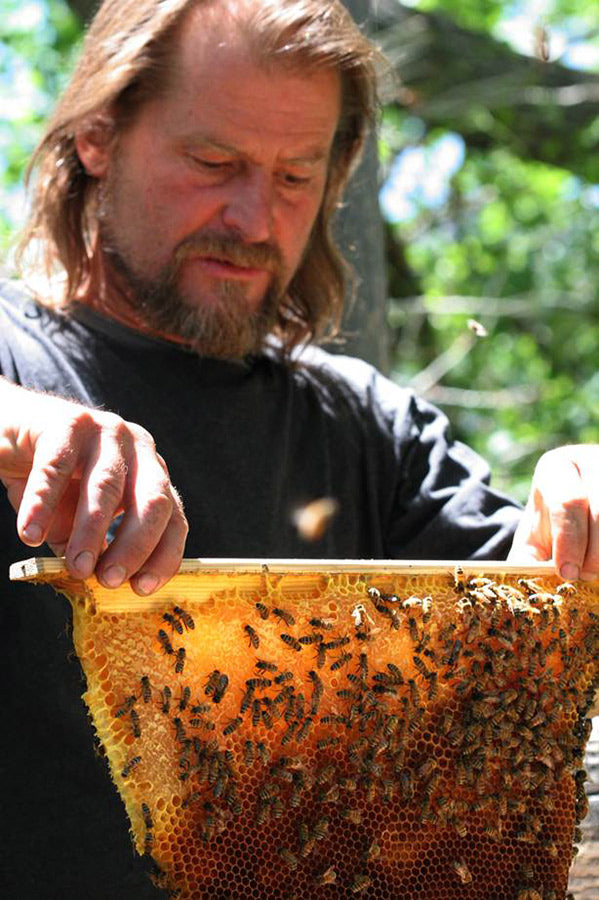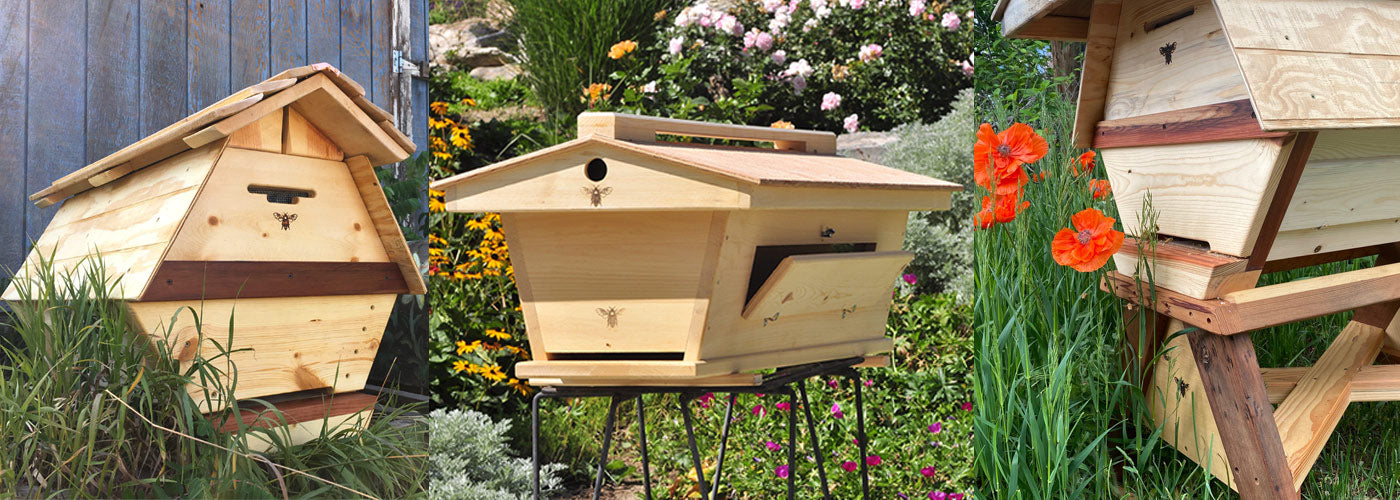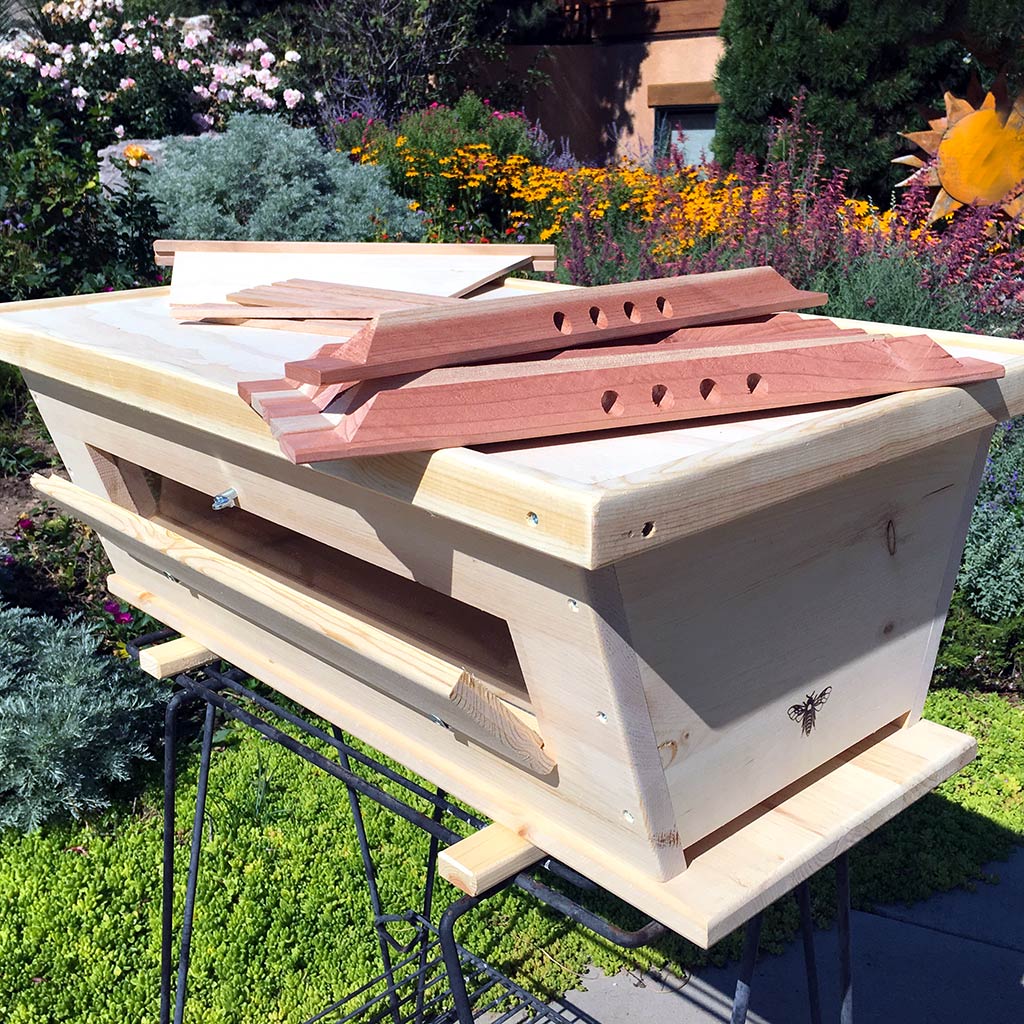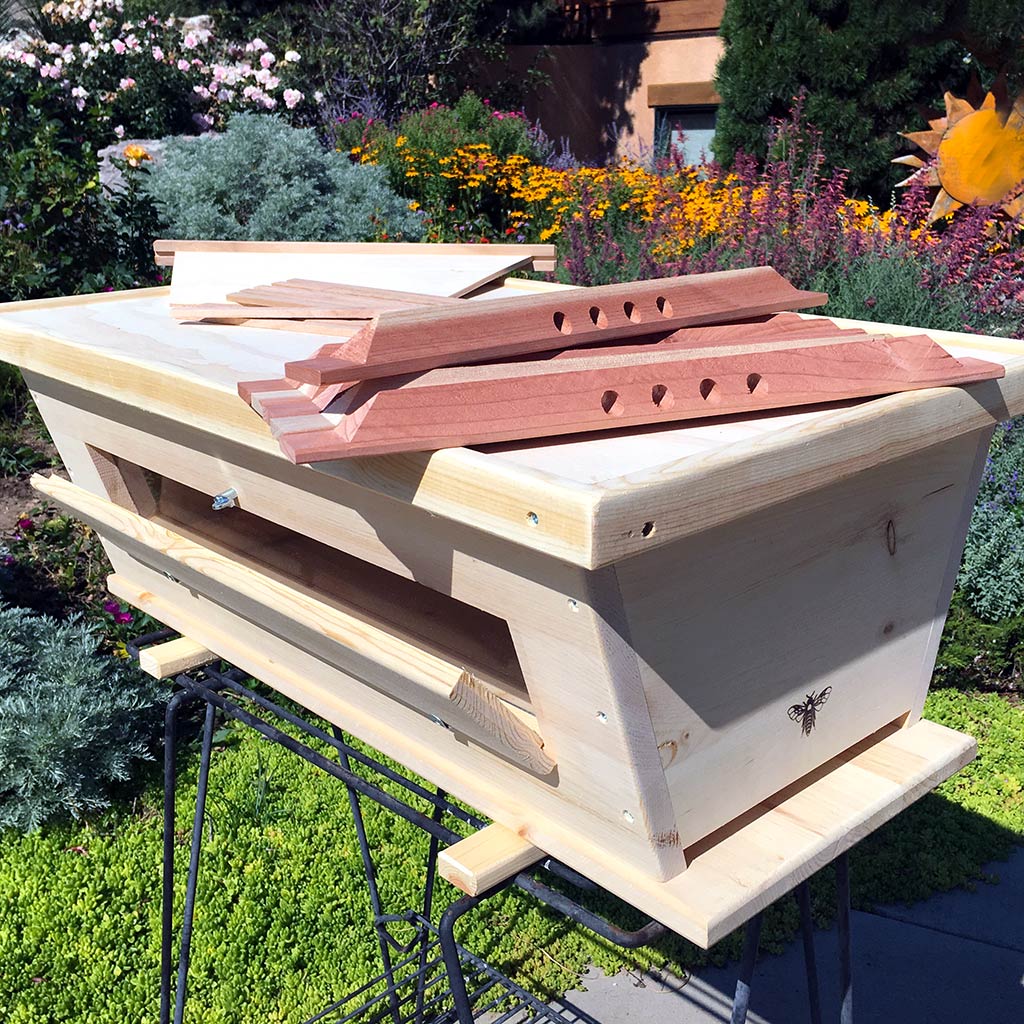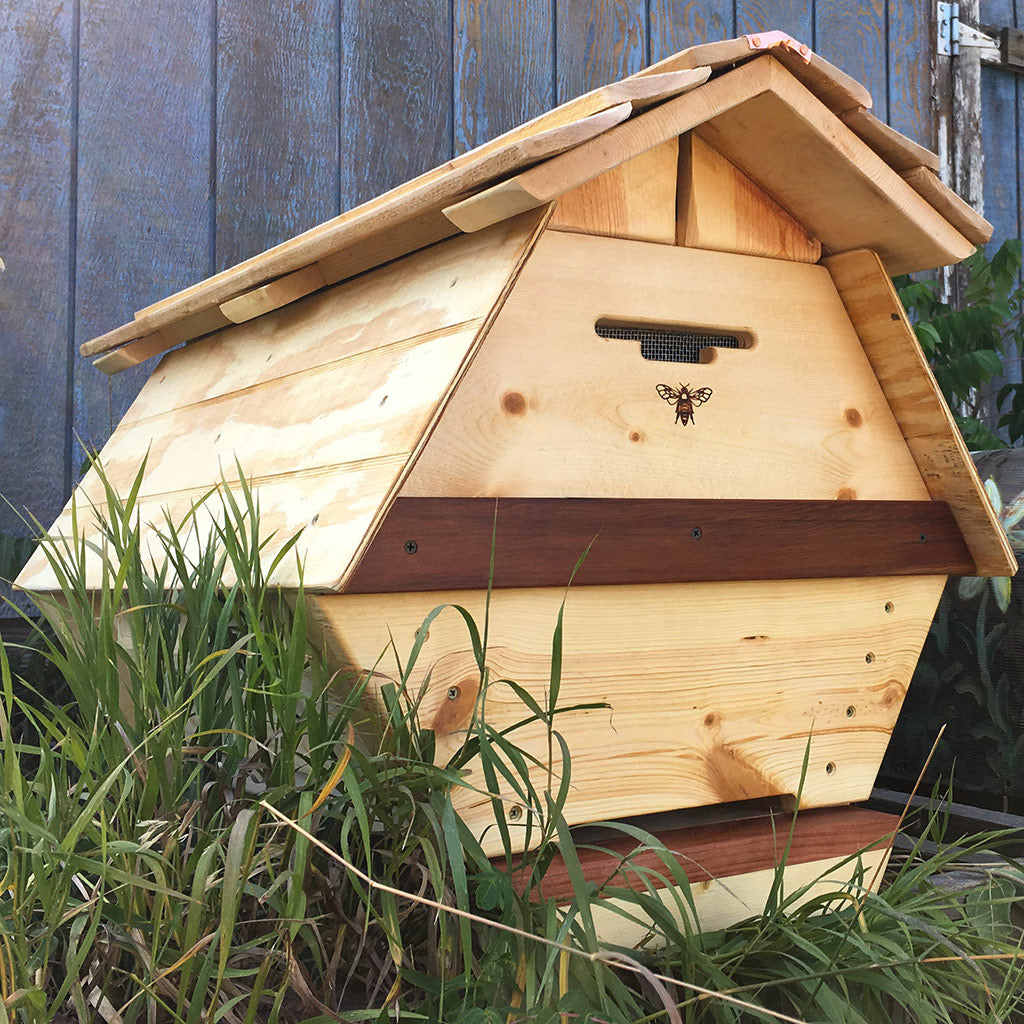
The size of the our hives is based on several considerations. The first is to make it manageable for the beginning bee guardian. A Langstroth hive will contain up to 80,000 bees. A High Volume top bar hive will contain about 50-60K bees. Working with a large number of bees can be very intimidating! Both of our hives are smaller. The Golden Mean hive contains about 20-30K bees, and the Backyard hive contains about 10-15K bees. The size and weight of the combs in our top bar hives are manageable for the average person.
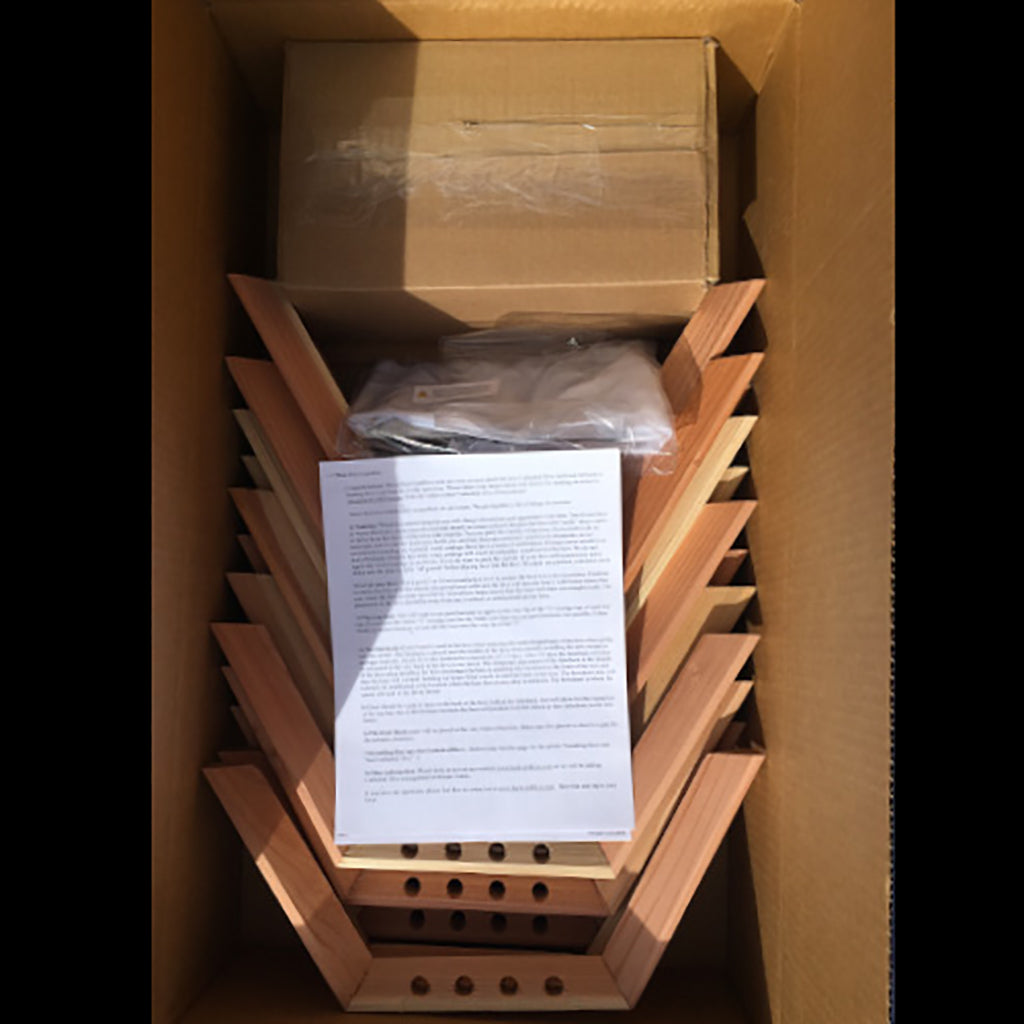
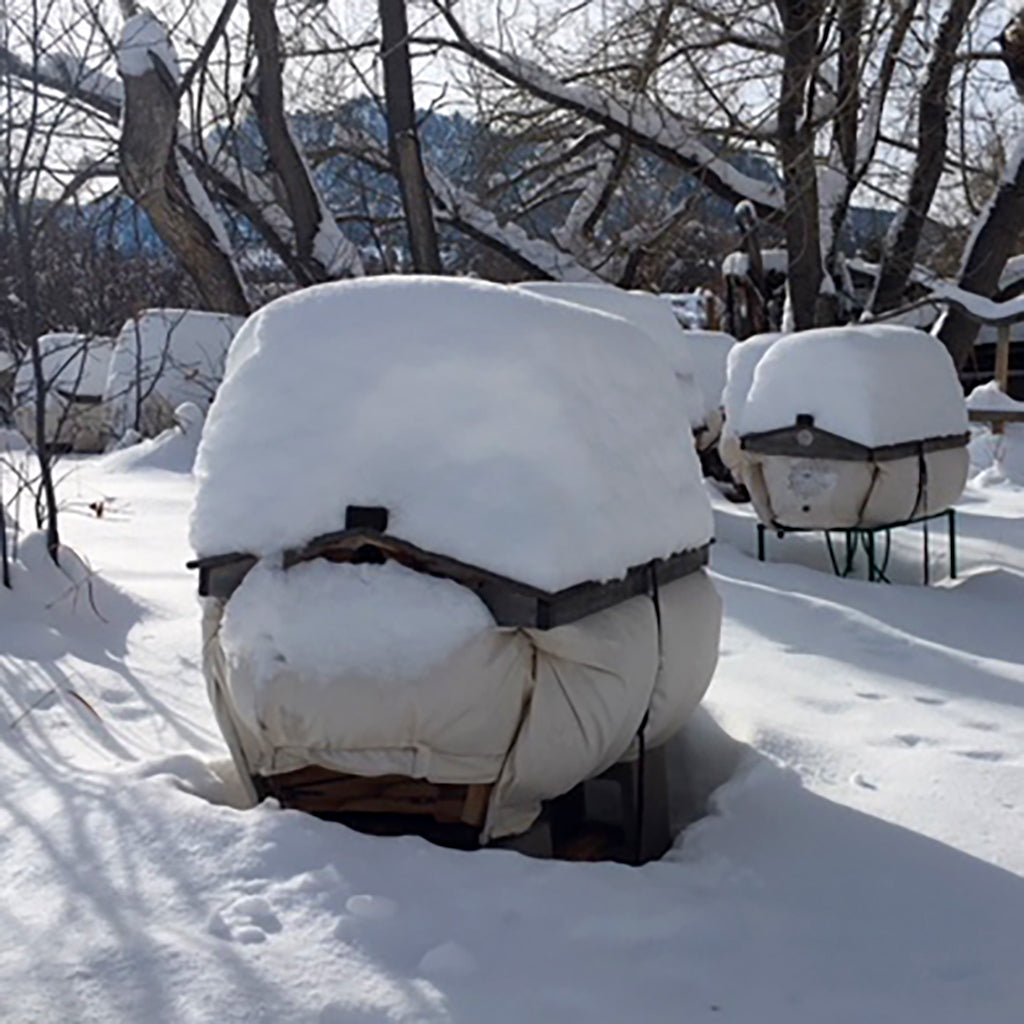
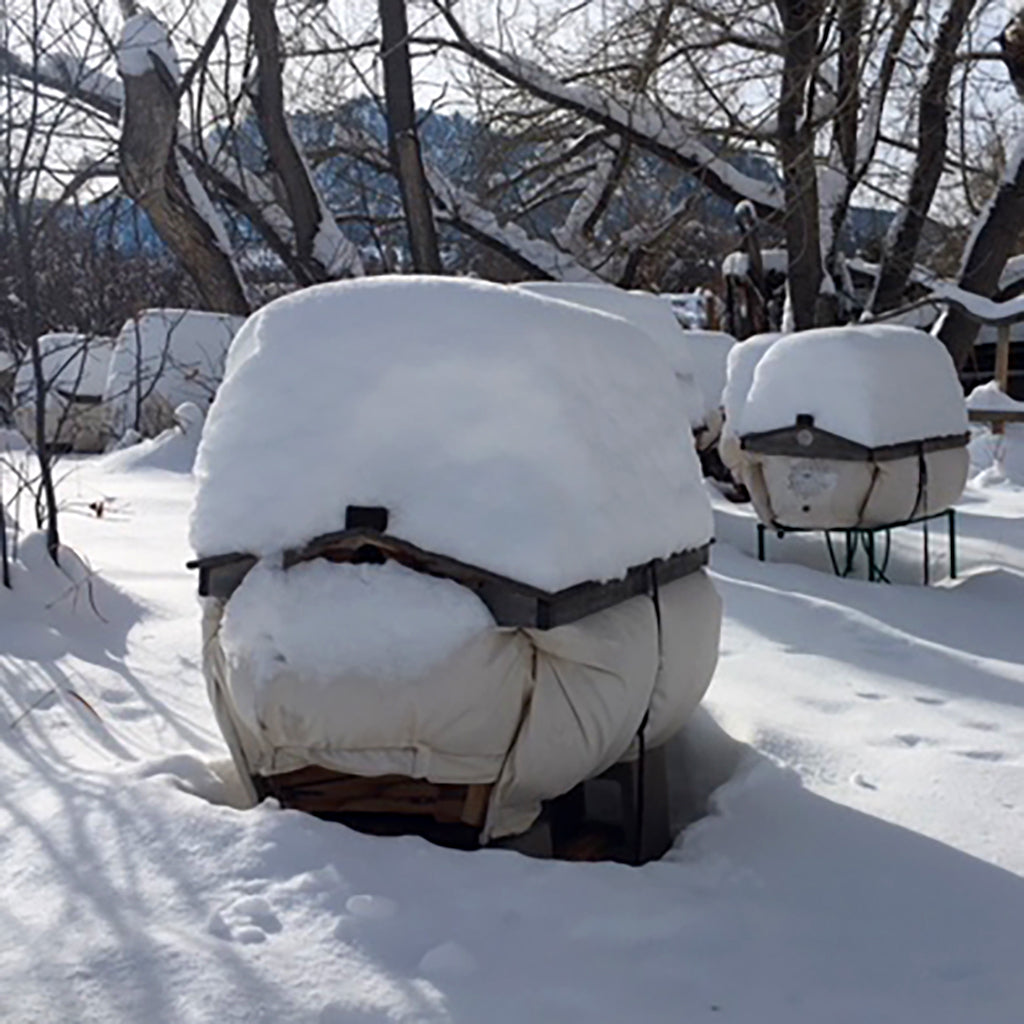
In colder climates our smaller hives can be winterized more effectively and the smaller space kept warmer by the bees. In addition, the smaller hive is easier to transport. The hive can be carried by one person to and from one location to another.
Finally, in an urban backyard, or in a semi-rural location, the small profile of our hives is not as obvious and intimidating for neighbors. They have a handsome aesthetic look that intrigues and interests, rather than evoking: "Oh my, the neighbor has bee hives!"
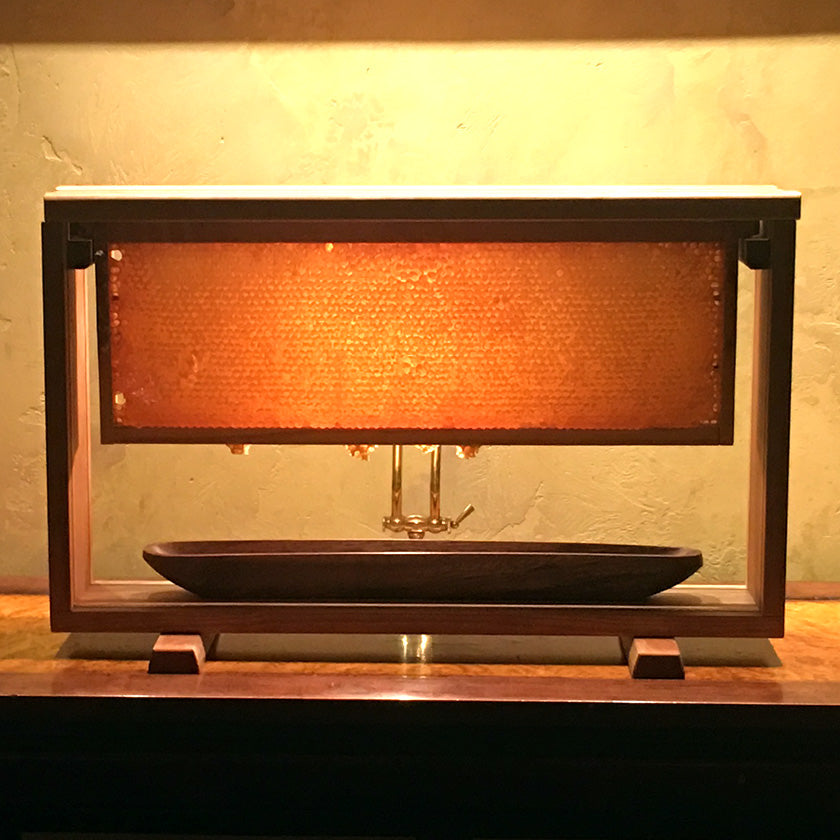
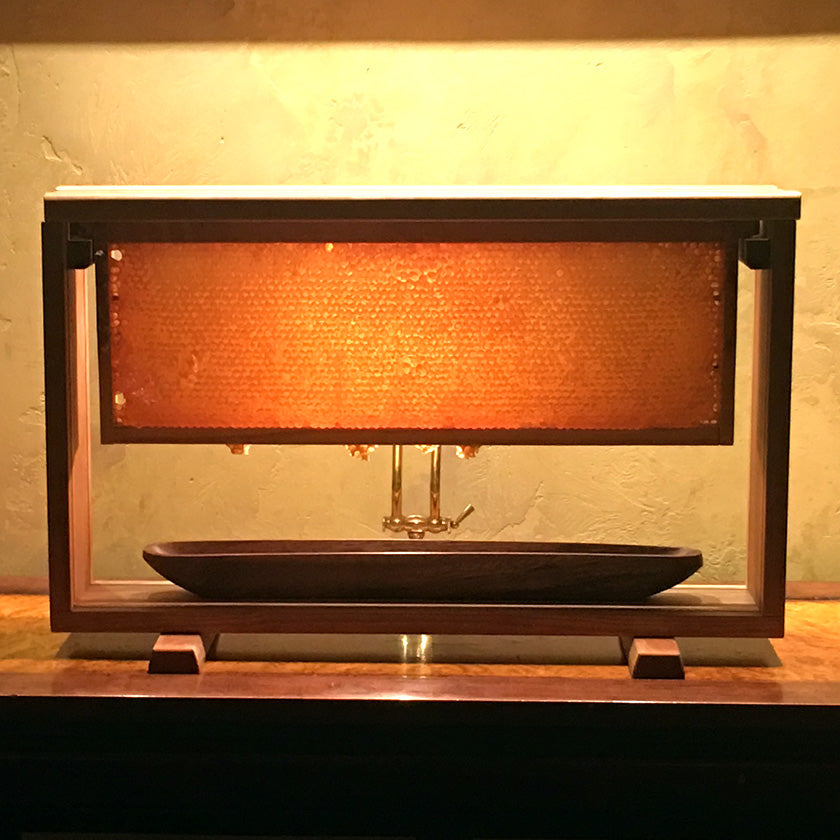
The difference between our two hives is the volume and the shape. Our Backyard hive will produce less honey, but the narrower construction of the hive makes it easier to harvest honey because the brood nest is further into the hive. From the GM hive you will harvest more honey, more quickly.
BackYard hive dimensions: 36” L x 14 1/2” W x 9” H
GM hive dimensions: 28 ˝” L x 18” W x 10” H
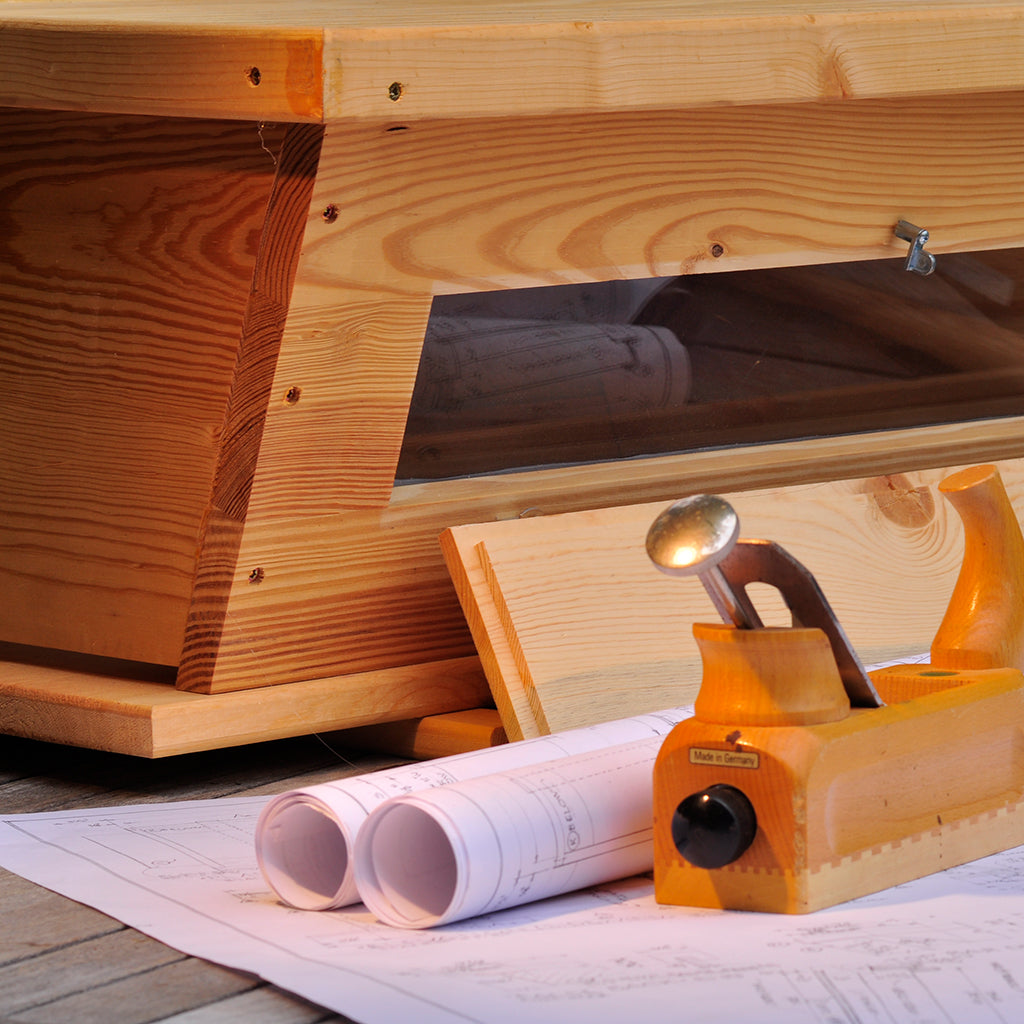
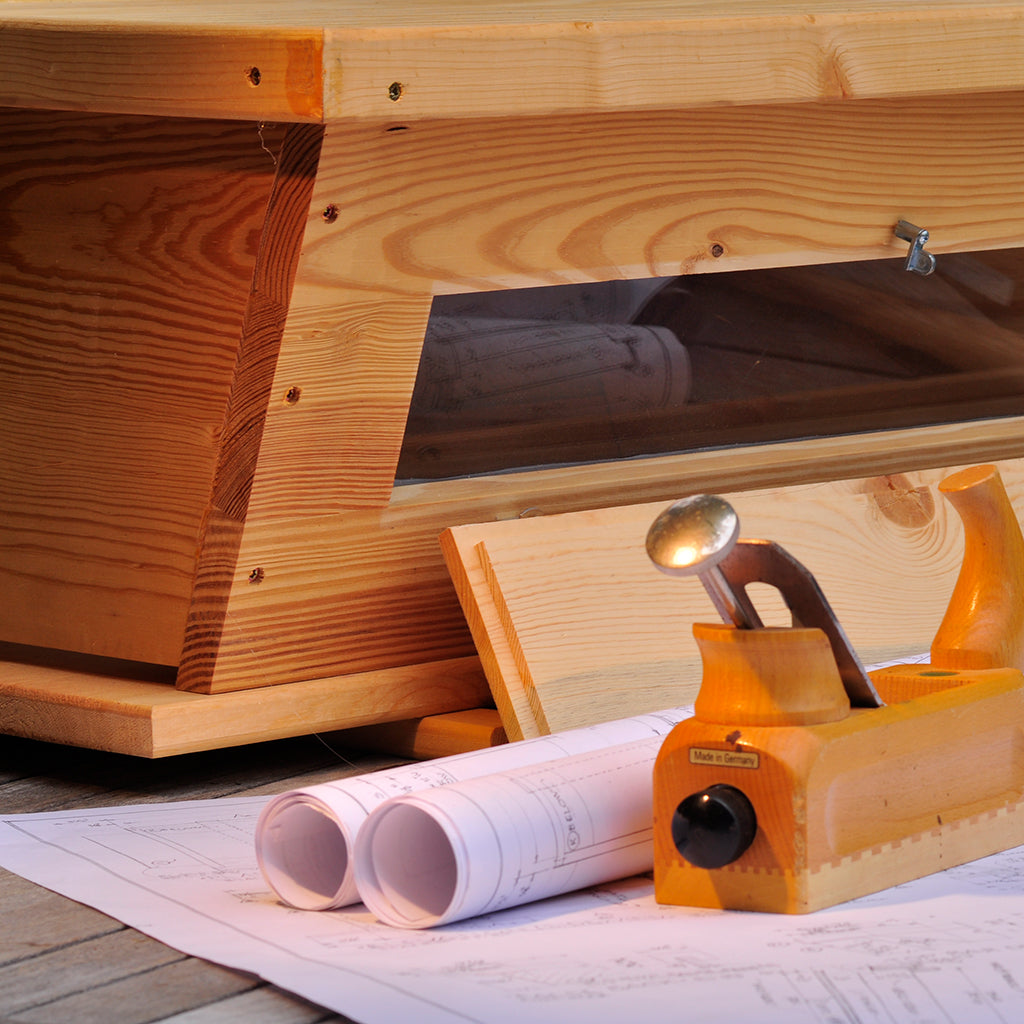
We construct our top bar hives from either white pine or beetle-kill pine from Colorado. They’re put together with screws and wood glue. The top bars themselves are made from hardwoods: either recycled pine or poplar. The wood has to be fibrous so it doesn’t splinter when you scrape wax off of it. We have heard of people constructing hives from cedar, but we don’t suggest its use as cedar emits a tannin that repels fungus and bugs. We use a double-strength glass (ds) for the window.
There are three reasons why we at BackYardHive do not feel a screen bottom is particularly useful.
1) The screen creates a false
bottom. The first problem is that the bees do not have access to the actual
floor and thus cannot clean it. We have seen screen bottom hives that are full
of worms and random growths – we don’t believe this is a healthy house.
2) The
second problem is hive temperature. The bees build their combs to fill the
space – with a false bottom they cannot regulate the hive temperature because
of that extra air pocket at the bottom of the hive. Also when the temperatures are 90 F outside, the screen
will
make it more difficult for them to cool the hive, which they have to do
when it's too hot out. See our FAQ on how the air is circulated through the hive
by the bees. Ventilation in the top bar hive .
3) The idea behind the screens was that the mites would fall through the screen This would allow the beekeeper to count them in order to assess the degree of infestation and thus how much pesticide to apply. We believe pesticides are part of the problem, not the answer, and we feel that an observation window (see our hives’ construction) is a far better manner of checking up on the health of your hive.
The mites that fall through the screen are dead. The screen is not a preventative measure.


Related Items
Comments & Questions